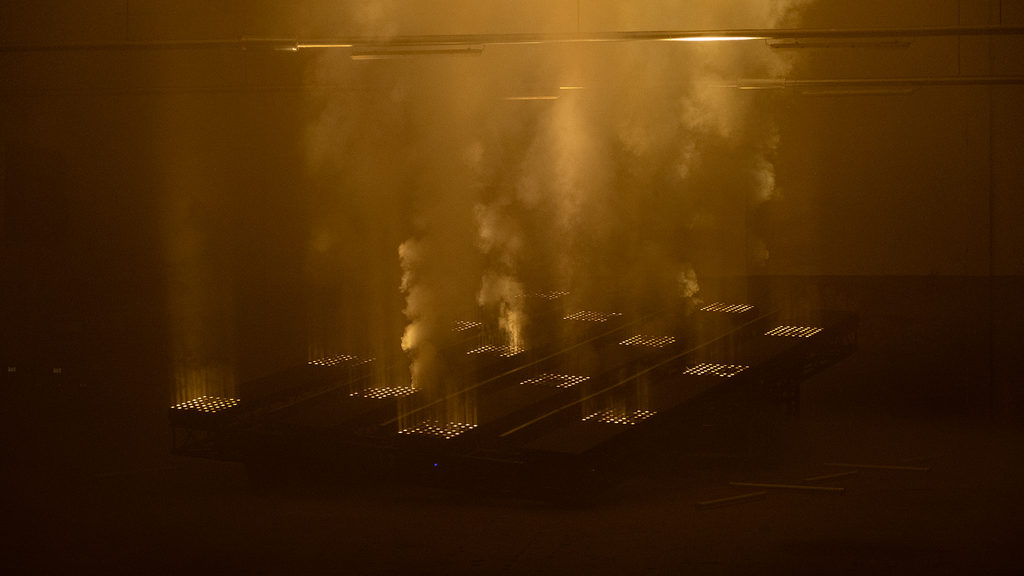
Light and sound installation exploring the environmental impact of digital infrastructures, +3° Hot Machines, 2026.
Artistic Practice
The research takes on shifting forms, languages, and identities, moving across sound, light, space, architecture, and digital media. An artistic practice in constant transformation, unfolding through technological experimentation, perceptual inquiry, speculative fiction, and cultural activism. Four interconnected territories shaped by the tensions between evolution and control, experience and representation, imagination and power.
Human and Artificial
The relationship between humans and the artificial is undergoing a radical transformation. Machines, once extensions of the body and human cognitive abilities, are becoming systems capable of learning, generating language, making decisions, and participating in the construction of reality.
The boundaries between natural and artificial are becoming increasingly blurred. Technology accompanies human evolution through the accumulation, transmission, and transformation of information. Tools preserve knowledge, extend the capabilities of organisms, and reshape their environments, continually redefining the boundaries between the living and the non-living. From this perspective, technology can be understood as a continuation of evolutionary processes, a way in which matter organizes information and generates new forms of complexity.
This apparent continuity reveals a fundamental political tension. Contemporary technologies emerge within economic structures and power relations that shape their design, distribution, and use. The growing concentration of technological power among predominantly Western, male elites, increasingly associated with authoritarian tendencies, influences communication, work, and social relationships. Platforms, algorithms, and interfaces structure time, guide behavior, and establish new habits and daily rituals, turning design choices and economic interests into seemingly natural conditions of existence.
Driven by a hacker ethos, artistic practice engages with these systems, explores their contradictions, and reconfigures their languages. Technology becomes simultaneously an expressive medium, an object of inquiry, and a site of political struggle: a space for experimenting with alternative relationships between humans, machines, and environments.
Thresholds of Perception
Reality constantly exceeds the limits of human perception. Every organism inhabits a perceptual world shaped by its sensory capacities, a particular interpretation of the environment constructed through the interaction between body and surroundings. Human experience encompasses only a fraction of a much broader spectrum of phenomena, frequencies, temporal scales, and material processes.
Machines extend these boundaries. Sensors, scientific instruments, and computational systems make information beyond the reach of human senses accessible, translating invisible, inaudible, and otherwise imperceptible phenomena into images, sounds, data, and new sensory experiences. Technology acts as an interface between different layers of reality, expanding what can be observed, interpreted, and imagined.
Artistic experimentation operates at this threshold, using technological devices to stimulate and alter the mechanisms of perception. Light, sound, vibration, movement, and architecture become elements of complex sensory environments capable of transforming our relationship with space, time, and the body.
Through immersion, disorientation, repetition, and intensified stimuli, unstable perceptual states emerge, reconfiguring the familiar coordinates of experience. The encounter between body and machine opens territories of ambiguity, suspension, and wonder, allowing otherwise inaccessible dimensions of reality to be explored.
Wonder takes on an epistemic role, emerging from encounters with what exceeds expectations, challenges perceptual certainties, and opens new fields of possibility.
Speculative Fiction
Imagining the future becomes a way of investigating the present. Every representation of what might happen is shaped by the tensions, expectations, and fears of its own time. Visions of the future reveal the cultural, political, and technological structures of the societies that produce them.
Speculative fiction projects contemporary contradictions into possible worlds, developing scenarios in which ongoing processes are amplified, accelerated, or pushed to their extreme consequences. Ecological crises, systems of control, automation, transformations of life, and emerging forms of coexistence become narrative materials through which the present can be examined from unfamiliar perspectives.
These scenarios often take the form of environments and situations that can be physically experienced. Immersion transforms fiction into a temporarily inhabitable reality, placing the audience within systems of rules, relationships, and choices that demand a response.
Imagination becomes an ethical exercise. Faced with critical conditions and ambiguous contexts, tensions emerge between freedom and security, survival and responsibility, individual interests and collective destiny. Decisions made within fictional worlds expose the values, contradictions, and behaviors that shape contemporary society.
The construction of possible futures opens a space for testing ethical positions and exploring consciousness, where the consequences of present-day transformations can be experienced, debated, and renegotiated through artistic engagement.
Art and Activism
The political dimension of the research extends from the production of artworks to the creation of the material, social, and cultural conditions in which art takes shape.
Within an attention economy driven by the transformation of experience into spectacle and the increasing concentration of cultural and technological infrastructures, artistic practice can assume a critical and generative role. Emotional engagement and wonder intertwine with the capacity to provoke dissent, challenge dominant narratives, and make alternative forms of social organization imaginable.
The artist becomes an active node within a network of relationships, knowledge, and skills. Cultural production evolves into a shared process connecting different disciplines, communities, and perspectives, creating opportunities for dialogue and collective experimentation.
Building independent spaces, temporary communities, and collaborative infrastructures extends artistic practice into organizational and social action. Autonomy, knowledge sharing, and experimentation with alternative models of production become tangible forms of cultural activism.
From this perspective, art operates simultaneously as an aesthetic experience, a critical device, and a practice of transformation. Its political dimension emerges through the capacity to generate connections, activate collective processes, and create the conditions for other realities to take shape.
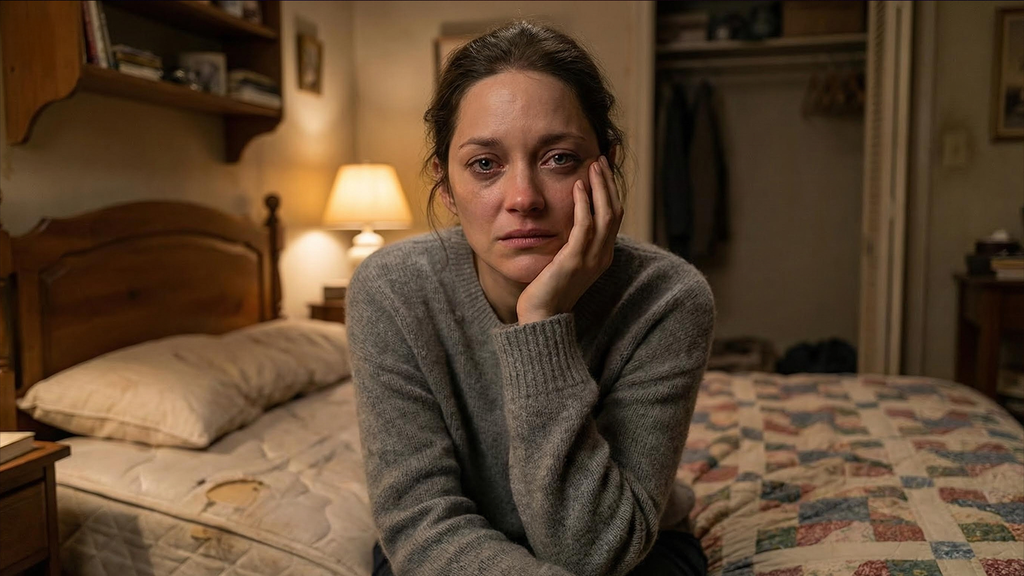
Camilla Dahal is an artificial character aware of being trapped inside an algorithm, The Committeee, 2026.